

The R&D tax credit is one of the most valuable refundable tax credits available to American businesses — and most of the companies that qualify have never filed for a dollar of it.
When most business owners hear “refundable tax credits,” they think of something designed for individuals — the Earned Income Credit, the Child Tax Credit, that kind of thing. They don’t picture a mechanism that can put six figures back into a business that spent money doing technical work last year. And the year before. And the year before that.
The R&D tax credit is a refundable tax credit under Section 41 of the tax code, and it is one of the most consistently under-claimed business tax benefits in the country. The reason isn’t complicated: the name is misleading. “Research and Development” makes you picture white lab coats and billion-dollar tech campuses. It does not make you picture the manufacturer in Ohio who spent $400,000 last year engineering a better production process, or the specialty contractor who built custom software to manage job costs, or the IVF clinic developing new patient protocols.
But those businesses qualify. And right now, they can claim refundable tax credits going back three years — 2022, 2023, and 2024 — before Congress permanently closes the retroactivity window. When the new tax bill passes, that window is gone. Not reduced. Gone.
Here are the five industries most likely sitting on refundable tax credits they’ve never touched.

1. Manufacturers
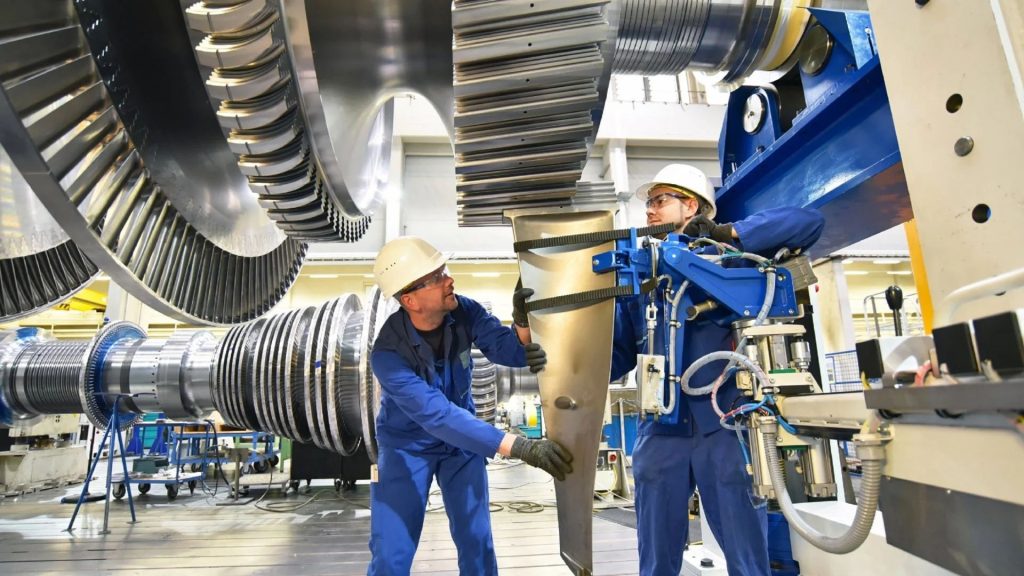
Manufacturing is probably the single most under-claimed sector for R&D refundable tax credits. Talk to the average plant manager and he’ll tell you his company doesn’t do research. Then he’ll describe, in detail, how his engineering team spent six months redesigning a component to cut failure rates. Or how they modified a production line to handle a new material. Or how they developed a custom fixture to meet a client’s spec that didn’t exist in any catalog.
That’s qualifying R&D activity. The IRS doesn’t require you to be inventing something the world has never seen. They require that you were trying to solve a technical problem where the solution wasn’t certain — and that you spent money doing it. Wages paid to engineers working on that problem, supply costs, and contractor fees all count toward the credit calculation.
For a mid-size manufacturer doing $5–20 million in revenue, the annual R&D refundable tax credit can land anywhere from $50,000 to $300,000. Multiply that over three years of retroactive claims and you’re looking at a number that changes capital decisions — equipment, headcount, debt service.
Most manufacturers don’t claim these refundable tax credits because their CPA doesn’t specialize in R&D studies, and no one has ever walked them through what qualifies. That’s not a knock on their accountant. It’s an expensive gap that a 20-minute conversation can close.
2. Software & Technology Companies
You’d think software companies would be first in line for R&D refundable tax credits. Some are. But a surprising number of software and SaaS businesses — particularly founder-led companies in the $1–15 million revenue range — either don’t claim the credit at all or dramatically undercount their qualified research expenses.
The biggest opportunity is in wages. Developer salaries are the largest line item for most software businesses, and a significant portion of that time — hours spent building new features, architecting systems, solving novel technical problems — qualifies toward refundable tax credits. The IRS allows you to apply a percentage of each qualifying employee’s wages to the credit calculation. For a team of ten developers averaging $120,000 per year, the math gets interesting fast.
Custom customer-facing software, new platform development, and novel technical architecture work generally clear the bar without much debate. Internal-use software qualifies under a slightly different standard but is still in play for many companies.
The companies most at risk of missing these refundable tax credits are the ones growing fast — too busy building to look back at three years of unclaimed money.

3. Engineering & Architecture Firms
Engineering firms are positioned for R&D refundable tax credits almost by definition. If your business employs licensed engineers who design solutions for clients — structural, mechanical, civil, electrical, it doesn’t matter — there is a strong probability that a meaningful portion of that work qualifies.
The question the IRS focuses on is technical uncertainty. Did your team have to figure something out, or were they executing a known process? For most engineering firms, the answer varies by project — and that’s fine. You don’t need every project to qualify for refundable tax credits. You need enough qualifying activity to make a study worthwhile, and for most engineering firms above $2 million in revenue, that bar is easy to clear.
Architecture firms that design custom structures — rather than applying standard templates to standard problems — are in a similar position. The design iteration, load analysis, and systems integration on a challenging project is exactly what refundable tax credits under Section 41 were built to reward.
For a $5 million engineering firm, a three-year retroactive study for refundable tax credits could recover $150,000 to $400,000. That’s not a rounding error. That’s a hiring decision, a piece of equipment, or a year of debt service.
4. Medical & Life Sciences Companies
Large pharmaceutical companies have entire tax departments maximizing their R&D refundable tax credits every year. Mid-size and small medical companies — device manufacturers, specialty clinics, biotech startups, diagnostic labs — often don’t. That gap is significant.
Qualifying activities in this space are extensive: developing or refining medical devices, testing new treatment protocols, improving diagnostic accuracy, building clinical data systems, conducting trials for new procedures. IVF clinics, for example, are doing legitimate scientific work on embryo development, lab protocols, and patient outcomes — work that often qualifies for refundable tax credits in full.
The challenge in this industry is documentation. Medical companies keep clinical records, not tax-friendly activity logs. A qualified R&D credit specialist knows how to reconstruct that history using payroll records, project timelines, and practitioner interviews — converting existing records into a defensible refundable tax credit study.
If you’re running a specialty clinic or medical device operation and you’ve never had a refundable tax credit conversation, there’s a real chance you’ve left six figures unclaimed across the last three years.

5. Specialty Contractors & Construction Firms
This one surprises people the most. Construction doesn’t feel like an industry built around refundable tax credits. But specialty contractors — the ones doing complex custom work rather than repeat builds — are often doing exactly what the credit was designed to reward.
Think about what a specialty contractor actually does on a challenging project. They’re solving structural problems with no pre-packaged answer. They’re developing installation methods for systems that haven’t been deployed this way before. They’re testing materials, building prototypes, and engineering solutions that didn’t exist when the project started. That process — technical uncertainty, experimentation, iteration — is the definition of qualifying R&D activity, and it generates real refundable tax credits.
Environmental contractors, mechanical contractors, electrical firms working on custom industrial installations, and design-build general contractors all have strong cases for refundable tax credits. Even contractors who employ in-house engineers or carry a significant design component deserve a conversation.
The contractors who don’t qualify are the ones executing standard, repeat processes with no technical uncertainty. If your team is solving problems on the fly and your engineers are earning their keep, you’re probably sitting on refundable tax credits you haven’t touched.

The Retroactivity Window on These Refundable Tax Credits Is Closing
Every one of these industries shares the same problem right now: a three-year retroactivity window for refundable tax credits that won’t stay open much longer. The current legislative environment is moving toward eliminating retroactive R&D credit studies. When the bill passes, businesses will only be able to claim credits going forward. Three years of qualified spending — already paid, already documented — becomes permanently unrecoverable.
This isn’t a soft deadline with wiggle room. There’s no extension, no grandfather clause, no workaround after the fact. The window on retroactive refundable tax credits closes when the bill passes, and the bill is moving.
Quartermaster Tax has recovered over $60 million in R&D refundable tax credits for businesses across these industries. The process starts with a free 20-minute call with a specialist — no commitment, no cost — to determine whether a full study makes sense for your business. Most companies that qualify know within that conversation.
If your business does technical work, takes on engineering risk, or employs people who solve problems for a living — find out if you’re sitting on refundable tax credits before the window closes.