

If you’re investing for retirement, chances are you have an IRA. Most people assume that IRA taxes only come into play when they withdraw their funds. But what if I told you that some IRAs are hit with double taxation, slashing your returns before you even touch your money?
It all comes down to a little-known tax called UBIT (Unrelated Business Income Tax)—and if you’re not careful, your IRA could be paying up to 37% in taxes before you ever withdraw a dime. Let’s break down what you need to know and how to protect your investments.

How IRA Taxes Usually Work
Most investors choose traditional or Roth IRAs because of their tax advantages:
- Traditional IRAs give you a tax deduction upfront, and your money grows tax-deferred. You pay income tax when you take distributions in retirement.
- Roth IRAs don’t offer upfront deductions, but your withdrawals are tax-free if you follow the rules.
For typical investments like stocks, bonds, mutual funds, CDs, and Treasury bills, there’s no immediate tax inside the IRA. The IRS lets your money grow without interference until you withdraw it.
But what if your IRA makes money from a business investment? That’s where things get complicated.
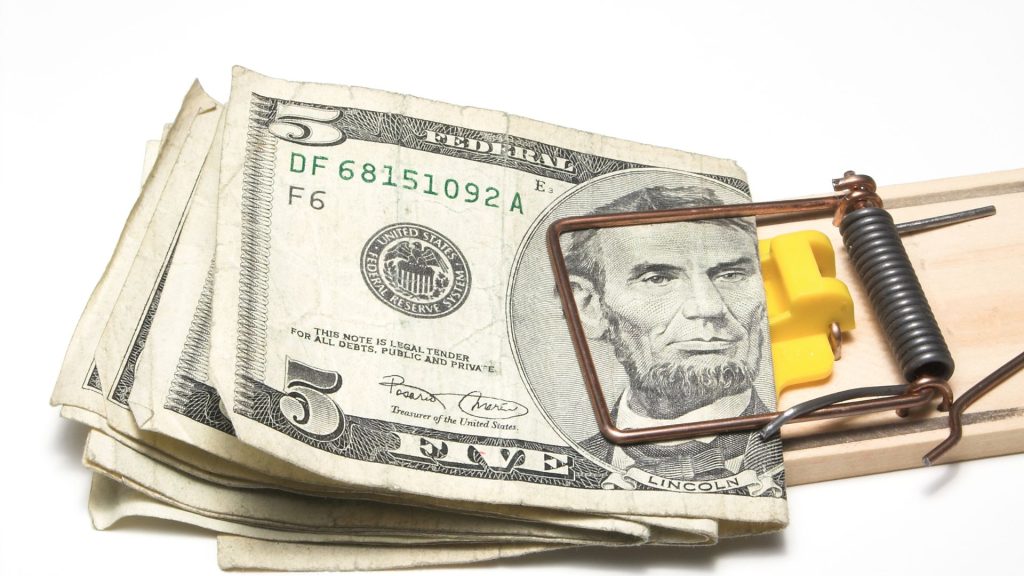
The IRA Tax Trap: UBIT and Double Taxation
UBIT (Unrelated Business Income Tax) was originally designed to prevent tax-exempt organizations from unfairly competing with regular businesses. But Congress also applied it to IRAs that invest in pass-through businesses—and that’s where investors get caught off guard.
If your IRA earns income from certain investments, it could owe UBIT at trust tax rates, which climb to 37% at just $15,651 of income. And because traditional IRAs still owe taxes when you withdraw the funds, this creates a double tax hit.
Here’s an example:
- Your IRA invests in a business and earns $100,000 in taxable income.
- The IRA must pay UBIT at 37%, leaving only $63,000 in the account.
- Later, when you withdraw that money, you pay another round of income tax—let’s say another 37%.
- You end up keeping only $39,690 of the original $100,000.
That’s a 60%+ effective tax rate—a nightmare for any investor.

What Types of IRA Investments Trigger UBIT?
Not every IRA faces this issue. Most traditional investments are UBIT-free, including:
✅ Stocks & bonds (dividends from corporations are taxed at the corporate level first)
✅ CDs & money market funds
✅ Treasury bills
✅ Real estate rents (as long as there’s no debt involved)
However, your IRA will face UBIT if it earns income from:
❌ Pass-through businesses (S corporations, partnerships, LLCs taxed as partnerships)
❌ Master Limited Partnerships (MLPs) (common in energy investments)
❌ Private equity & hedge funds (if structured as partnerships)
❌ Debt-financed real estate (if your IRA buys property with a loan)
This last point—Unrelated Debt-Financed Income (UDFI)—catches a lot of investors by surprise. If your IRA buys real estate using leverage, part of the profits could be subject to UBIT, even if it’s a rental property.

How to Avoid These IRA Tax Pitfalls
Fortunately, there are strategies to reduce or eliminate these hidden IRA taxes:
1️⃣ Stick to tax-exempt investments. If you’re using a traditional IRA, focus on stocks, bonds, ETFs, and other conventional assets that won’t trigger UBIT.
2️⃣ Consider a Roth IRA. While a Roth IRA still pays UBIT on certain investments, the withdrawals are tax-free, so at least you avoid double taxation.
3️⃣ Use a C Corporation “blocker.” Some investors structure their IRA investments through a C corporation, which pays corporate tax (21%) but shields the IRA from UBIT.
4️⃣ Be careful with real estate and partnerships. If your IRA invests in real estate, avoid debt financing or make sure any loans are paid off 12 months before selling the property to avoid UDFI tax.
5️⃣ Monitor your investments carefully. If your IRA earns more than $1,000 in UBIT-triggering income, it must file Form 990-T and pay taxes. Many IRA custodians don’t track this, so you need to stay on top of it.
The Bottom Line on IRA Taxes
Most investors don’t realize that IRA taxes can kick in before they ever take a withdrawal. If your IRA invests in the wrong types of assets, you could end up paying double taxation at rates as high as 60%.
At Quartermaster Tax, we specialize in helping business owners and investors structure their finances to minimize tax liabilities and maximize returns. If you’re unsure whether your IRA investments are tax-efficient, let’s talk.
👉 Schedule a free consultation today, and let’s make sure your retirement money stays yours.
By staying informed and planning ahead, you can grow your IRA without unexpected IRS surprises—and that’s how you truly build wealth.