
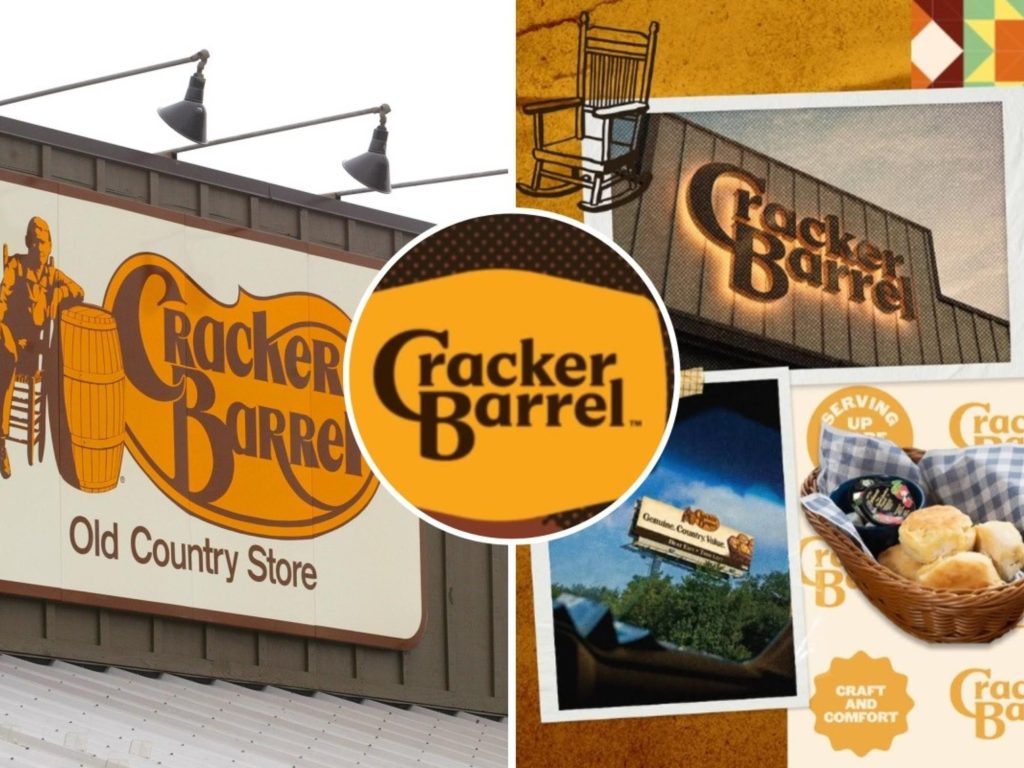
Cracker Barrel’s New Logo Sparks Controversy
When a company decides to rebrand, it’s usually pitched as “bold,” “fresh,” and “forward-looking.” Sometimes it works, but sometimes it turns into a case study in how to alienate your best customers overnight.
Cracker Barrel just gave us one of those case studies.
This past month, the iconic southern-style restaurant chain announced its first major logo redesign in nearly 50 years. Out went the rustic illustration of Uncle Herschel sitting by a wooden barrel, the warm, storytelling image that had graced their signage since 1977. In came a clean, minimal, text-based logo in gold and brown, meant to look sleek on apps and digital storefronts.
The problem? Loyal customers hated it. Investors punished the stock. Commentators across the spectrum mocked it as another brand falling victim to the “blanding” epidemic.
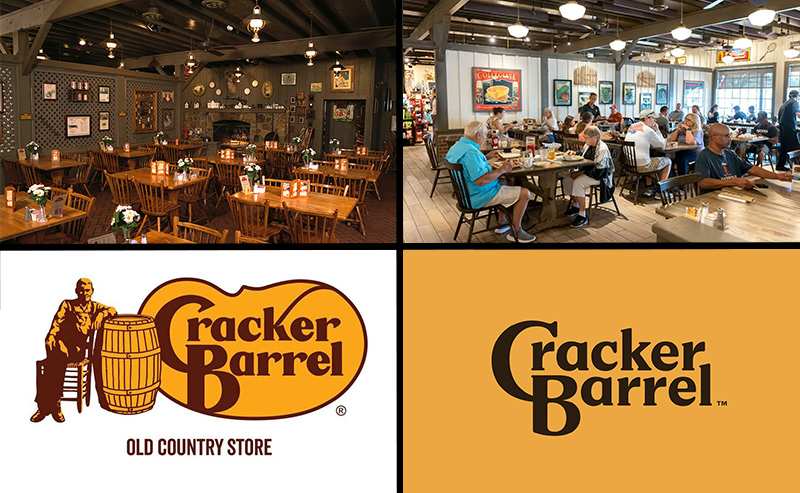
A Brand Built on Nostalgia Since 1969
Cracker Barrel’s entire business model was nostalgia. Since opening its first store in Lebanon, Tennessee, in 1969, the company has marketed itself as a warm, old-time country store where customers could find comfort food and a taste of Americana.
The logo wasn’t just decoration — it was the brand. Uncle Herschel, rocking chairs on the porch, peg games on the tables, and walls crammed with vintage décor all told the same story: this was a place frozen in time, where the past lived on.
For decades, that consistency worked. The brand grew to over 660 locations nationwide. Even during tough economic times, Cracker Barrel could rely on its loyal customer base — families on road trips, retirees, church groups — who weren’t just eating biscuits and gravy. They were buying a piece of memory.
Inside the $700 Million “All the More” Rebranding Campaign
But nostalgia doesn’t always sit well with executives eyeing new markets. Cracker Barrel’s leadership announced a $700 million rebranding initiative called “All the More.” The plan included:
Modernized stores with updated interiors and sleeker façades.
Menu expansions designed to appeal to a younger demographic, including lighter options and spicier flavors.
Digital investments to streamline online ordering and app experiences.
And of course, a new logo — simplified typography that would translate more cleanly onto screens.
On paper, the idea made sense. Cracker Barrel wanted to compete not just with roadside diners, but with fast-casual brands like Panera and Chipotle that appeal to Millennials and Gen Z.
But in execution? The strategy collided head-on with the very identity that made Cracker Barrel unique.

Cracker Barrel Backlash: Customers and Investors React
The reaction was swift and brutal.
Customers revolted. Longtime fans accused the company of abandoning its roots. Social media lit up with complaints that the logo looked “generic,” “soulless,” even “woke.” For many, the new design stripped away the character and warmth they associated with the brand.
Investors punished the move. Cracker Barrel’s stock plunged as much as 15% in the days after the announcement, wiping out nearly $100 million in market value. Analysts noted that investors feared the rebrand would alienate loyal customers without successfully attracting new ones.
Commentators piled on. Branding experts labeled the redesign a textbook case of “blanding”—a trend where companies flatten distinctive identities into sterile, minimalist logos that could belong to anyone.
Even Cracker Barrel itself had to admit it bungled the rollout. Executives told the press they “could’ve done a better job” explaining the change and quickly reassured customers that rocking chairs, peg games, and even Uncle Herschel would remain in stores and on menus.
But the damage was done.
Why the Cracker Barrel Logo Redesign Failed
So why did this backfire so badly? Three big reasons stand out:
1. It Ignored Emotional Equity
A logo isn’t just an image — it’s a symbol of trust. For decades, customers associated Cracker Barrel’s old design with comfort, tradition, and reliability. By stripping that away, the company sent a message: What you loved doesn’t matter anymore.
2. It Chased Trends Instead of Strengths
Minimalist, flat logos may look better on a phone screen. But Cracker Barrel isn’t a digital-native company. Its appeal is physical, tactile, and nostalgic. By pretending to be something it wasn’t, the brand lost its authenticity.
3. It Failed to Communicate Clearly
Change is always risky. Customers might have been more forgiving if Cracker Barrel had clearly explained the “why” behind the rebrand. Instead, it rolled out a new look without context — leaving people to assume the worst.
The Bigger Lesson: Businesses Are Built on Trust, Not Trends
Here’s the takeaway every business owner should note: a brand is a promise, not a fad.
When you change your image, your messaging, or even your business model, you’re not just tweaking design elements. You’re touching the core of what your customers believe about you. And once you break that trust, it’s incredibly hard to rebuild.
This doesn’t mean you can never modernize. Change is sometimes necessary. But successful change respects the foundation that made you strong in the first place. Think of Coca-Cola returning to “Classic Coke” after the New Coke disaster, or Harley-Davidson embracing heritage after dabbling with off-brand experiments.
Cracker Barrel forgot this rule. And now it’s paying the price.

Quartermaster Tax: Grounded in Trust and Built on Understanding Clients
At Quartermaster Tax, we don’t chase trends for the sake of trends. Our focus is simple: help businesses maximize their potential while staying grounded in what makes them unique.
That’s why our approach is consultative, not cookie-cutter. We spend the time to understand you and your business — your goals, your values, your customer base. From there, we craft strategies that work for you, not whatever happens to be fashionable this quarter.
Whether it’s tax planning to reduce what you owe, or profit acceleration consulting to identify untapped growth opportunities, our work is built on the same principle Cracker Barrel forgot: long-term trust beats short-term buzz every time.
Our clients don’t just see tax savings. They gain clarity, confidence, and a sustainable path forward. That’s why they stay. That’s why they refer others. That’s why Quartermaster is growing.
Final Thought: The Cracker Barrel Case Is a Warning
Cracker Barrel’s $700 million gamble shows what happens when a business stops listening to its people. You don’t build loyalty by chasing whatever’s shiny. You build it by honoring what your customers already trust you for.
At Quartermaster Tax, that’s our entire mission: reducing burdens, unlocking potential, and helping businesses reclaim what’s possible — without losing what made them strong in the first place.
Because whether it’s biscuits and gravy or business growth, the recipe that works is always the same: know your people, keep your promise, and build on trust.